Industrialized Shipyards
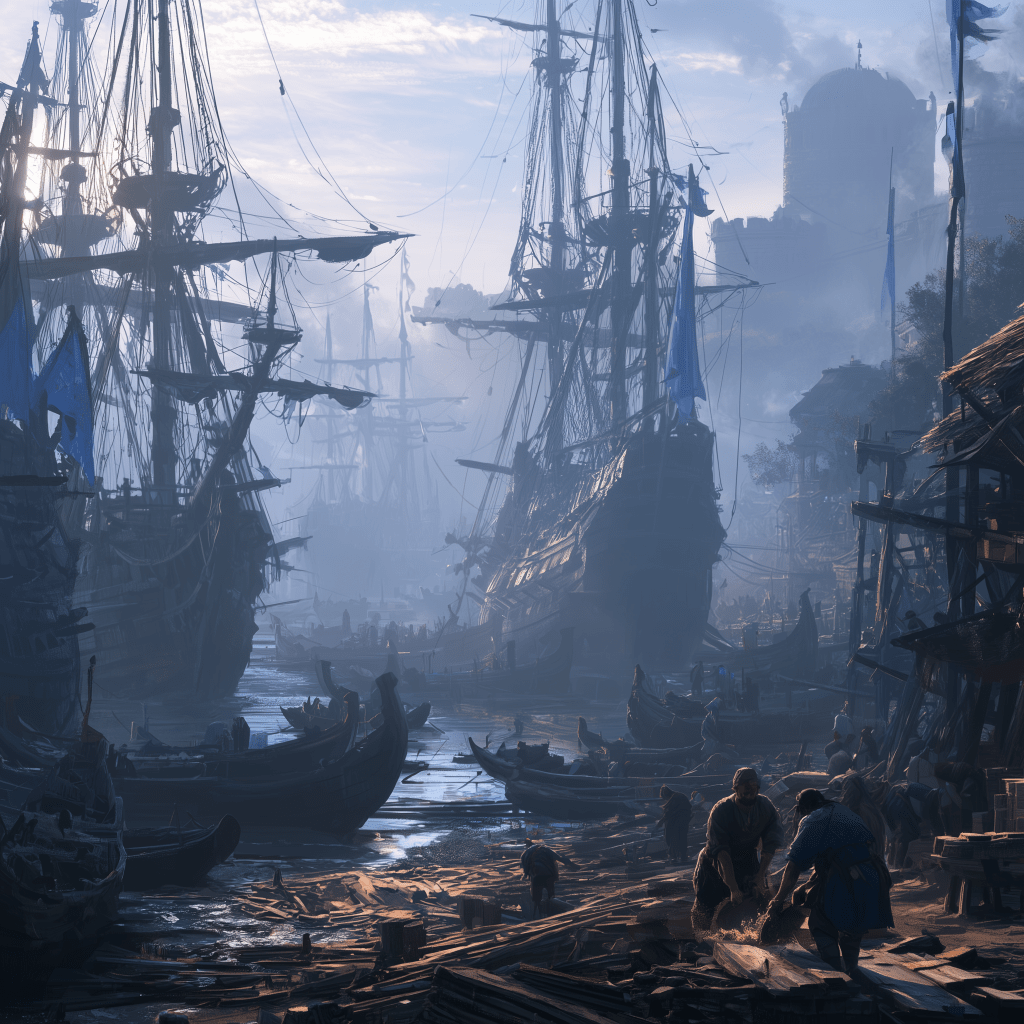
Because of the 400-year-long war between the Lumare & Kaligo Empires, the need to build ships fast and efficiently has streamlined the process immensely through the use of standardized pre-cut frames and modular assembly lines, cutting the time it takes to produce boats and ships by around 80%.
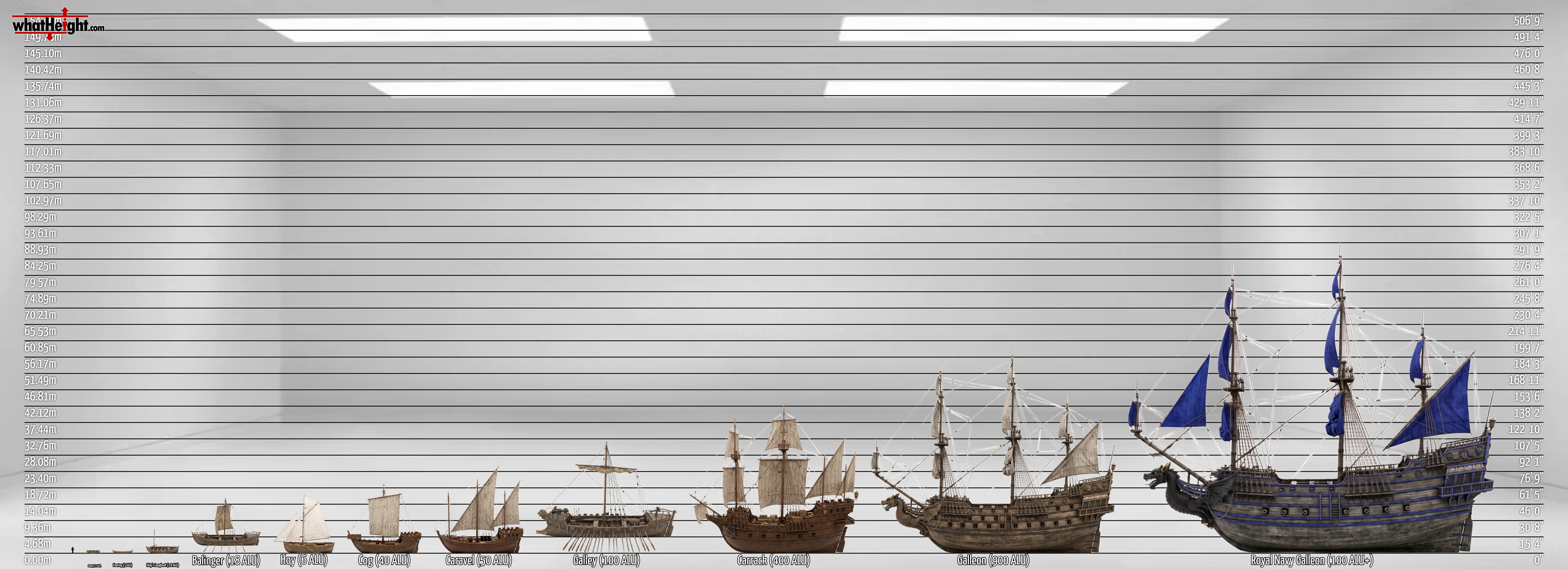
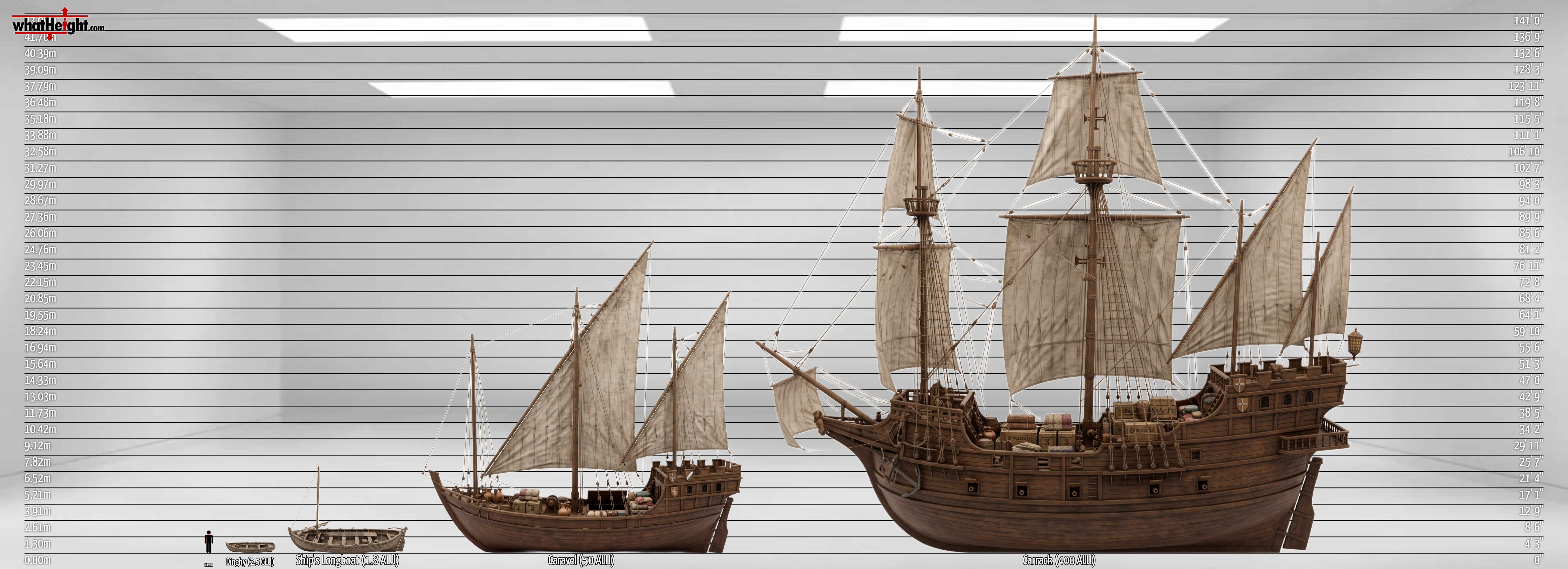
Both the Kaligo & Lumare Empires have vast shipyards dedicated entirely to supplying the military with the ships they need, each nation producing a staggering 30 galleons, 100+ cogs, caravels, and galleys, and thousands of dinghies and longboats every single month.
However, do not mistake speed for sloppiness, as the ships built by the two empires are both exceptionally crafted, utilizing cutting-edge design and technology, detailing, and dozens of rigorous quality checks.
The ships built for the royal navies are especially impressive, with some capital ships reaching lengths up to 90 meters, built entirely of ironwood.
Ironwood, Steam Cannons, and IF Engines
The technological aspect isn’t something the empires skimp on one bit, especially when it comes to their warships, and even more so when it comes to their royal navy.
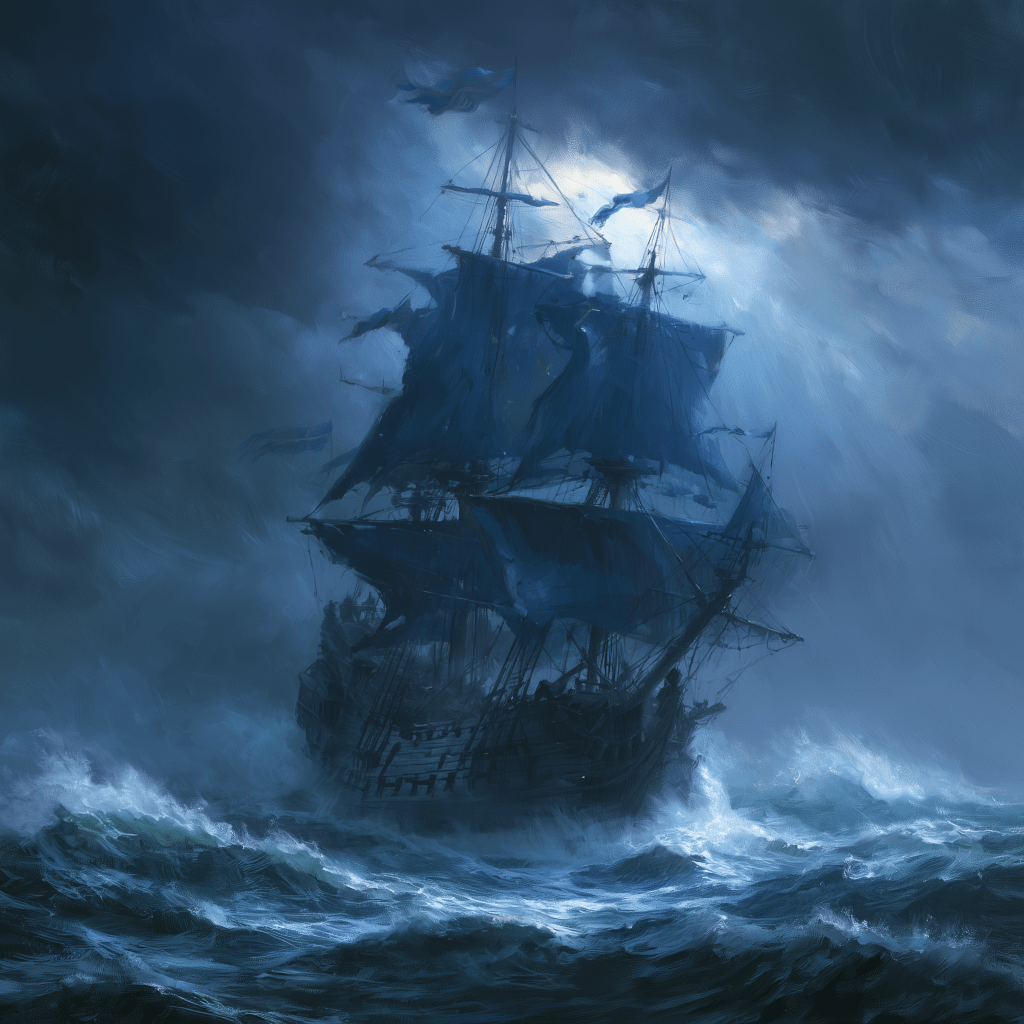
While it’s substantially cheaper to build ships out of oak or spruce, for the Lumare Empire, battling the Kaligo Empire‘s fire magic, fire resistance is a non-negotiable, leading to most Lumare warships being made almost entirely of heavy, fire-resistant, and sturdy ironwood.
Because both the wood itself is expensive and the tools to work it need to be made of adamantite-steel, the price of ironwood ships typically goes up by a factor of 3-5x compared to the price of an equivalent ship made of oak.
For firepower, most larger warships (Carracks and Galleons especially) have Steam Cannons mounted into the sides (in place of gunpowder cannons), with plenty more smaller holes for crossbowmen or steam rifles to blast through. The deck also typically has one or two swivel steam rifles on each side.
To protect themselves from magic bolts, the most expensive ships even have steel (and sometimes even adamantite-steel) plating on the sides, though typically the plating is only on weak points, protecting cargo or flarestone cells.
The top-of-the-line, most advanced royal ships sometimes do not even need sails or oars, powered entirely by twin-turbined IF engines, spinning two roaring propellers, fully protected by adamantite-steel casings. Because of the immense price of an IF engine, this is only really seen in the high royals’ personal ships and galleons.
Prices & Build times
| Vessel | Build Time | Cost | Ironwood Cost |
| Dinghy | 1-2 days | 2.5 GLU (€2,500) | 8.75 GLU (€8,750) |
| Faering | 2-3 days | 5 GLU (€5,000) | 1.75 ALU (€17,500) |
| Ship’s Longboat | 5-7 days | 1.8 ALU (€18,000) | 6.3 ALU (€63,000) |
| Hoy | 1.5-2 weeks | 6 ALU (€60,000) | 21 ALU (€210,000) |
| Balinger | 2–3 weeks | 18 ALU (€180,000) | 63 ALU (€630,000) |
| Cog | 3-4 weeks | 40 ALU (€400,000) | 140 ALU (€1.4M) |
| Caravel | 4-5 weeks | 50 ALU (€500,000) | 175 ALU (€1.75M) |
| War Galley | 2-3 weeks | 100 ALU (€1M) | 350 ALU (€3.5M) |
| Carrack (Nau) | 2-3 months | 400 ALU (€4M) | 1,400 ALU (€14M) |
| Galleon | 3-5 months | 900 ALU (€9M) | 3,150 ALU (€31.5M) |
| Royal Galleon | 10-14 months | 6,000 ALU (€60M) | 20,000 ALU (€200M) |